

AI Benefits & Risks
Explore the promises and pitfalls of artificial intelligence to make informed, ethical choices.
Updated: 1 April 2026
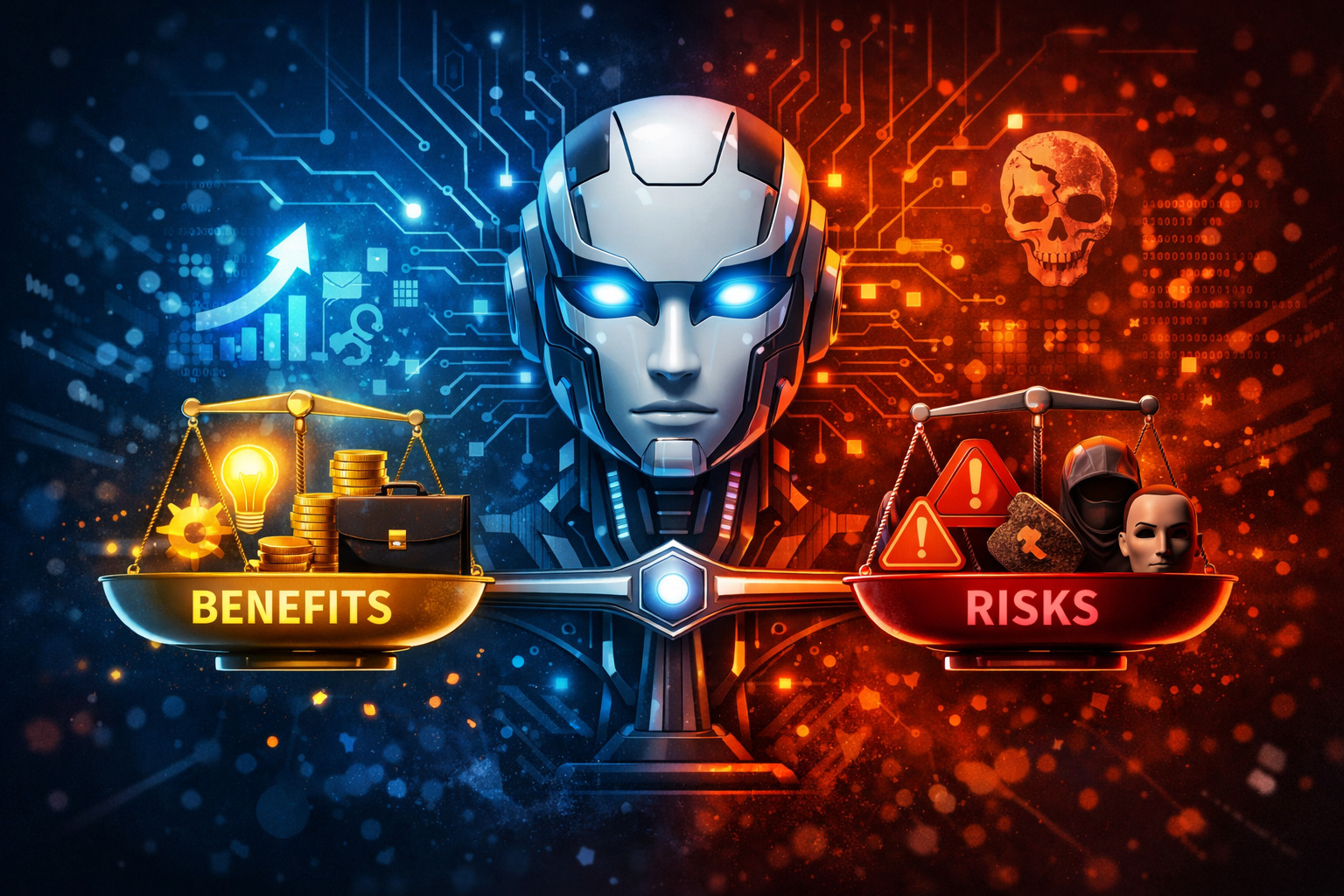
Why Understand AI’s Impact?
Artificial intelligence is reshaping how we work, create and learn. While tools can automate mundane tasks, analyze massive datasets and even generate media, they also raise ethical and social questions. This overview summarizes the key advantages and challenges of adopting AI so you can harness its power responsibly.
Benefits of AI
When applied thoughtfully, AI delivers tangible value across many domains:
- Automation of repetitive tasks: Machine‑learning models can handle routine, rule‑based activities, freeing humans for higher‑level creative work.
- Rapid data analysis: AI systems can quickly sift through large datasets to detect patterns, forecast trends and surface insights that would be impossible to uncover manually.
- Improved decision‑making: By analyzing historical information and real‑time inputs, AI assists with diagnostic, financial and strategic choices, helping organizations make more informed decisions.
- Generative creativity: Generative models can produce text, images, music and video, empowering creators to brainstorm ideas and explore new aesthetics. When used appropriately, these tools expand rather than replace human imagination.
Risks & Challenges
AI isn’t a silver bullet. To mitigate harm, consider these concerns:
- Job disruption: Automation may displace some roles, requiring reskilling and new job creation. Organizations must support workers through this transition.
- Bias & fairness: AI models learn from existing data, which can embed societal biases. Without careful design and oversight, systems may perpetuate discrimination.
- Lack of genuine creativity: Generative AI can mimic patterns but doesn’t truly understand context or meaning. It can produce convincing but inaccurate content or perpetuate plagiarism.
- Misuse & safety: Tools may be used to generate misinformation, deepfakes or harmful content. Strong ethical guidelines and verification mechanisms are essential to prevent misuse.
Balancing Innovation & Responsibility
Harnessing AI’s benefits while minimizing its risks requires a balanced approach. Evaluate use cases carefully, prioritize transparency and fairness, and involve diverse voices in development. Ongoing monitoring and regulation will help ensure AI serves the public good.
Key Takeaways
- AI boosts productivity: Automating routine tasks and accelerating data analysis frees time for creative work.
- Informed decisions: Systems provide insights and predictions that improve decision‑making in domains like healthcare, finance and logistics.
- Ethical vigilance: Bias, misuse and job displacement are real issues. Responsible AI development and regulation are crucial.
- Human creativity matters: Generative models are tools—not replacements—for human imagination.