

AI in Healthcare & Well‑Being
How AI is transforming diagnostics, triage and treatment.
Updated: 1 April 2026
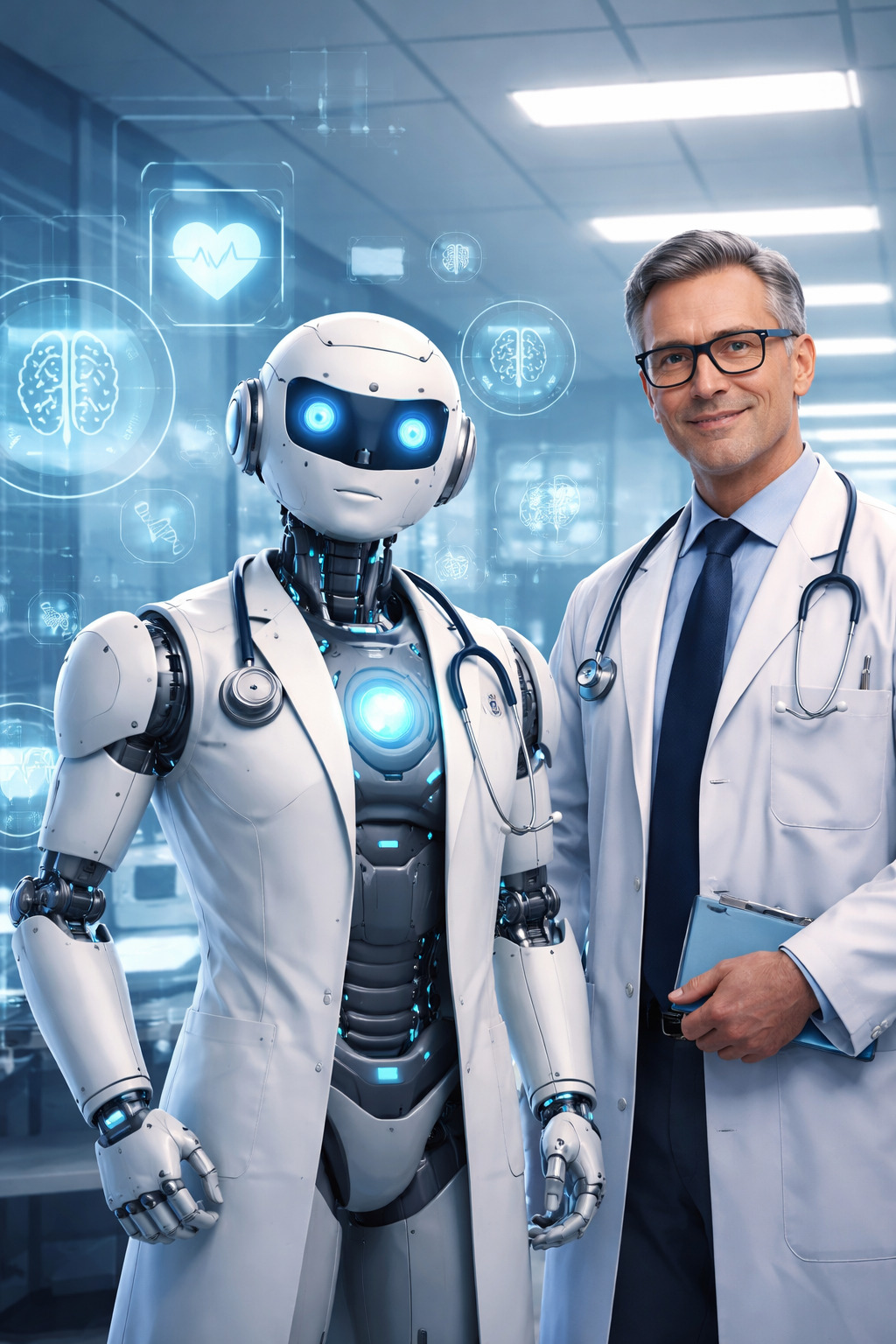
Beyond Diagnostics
Today’s AI excels at identifying patterns in scans and lab results. In the future, generative models will go further by helping triage patients, plan treatments and recommend personalised therapies. According to Microsoft’s forecasts, this shift could deliver advanced care to millions who currently lack access to specialists.
Closing the Care Gap
Remote‑first platforms, chatbots and AI‑powered clinics can bring healthcare services to underserved regions. Intelligent triage tools will prioritise cases and allocate resources effectively, while language‑translation models will help doctors communicate with patients worldwide.
Ethics & Privacy in Health AI
Health data is deeply personal. Developers must protect patient privacy and ensure algorithms treat all individuals fairly. Transparent models, rigorous validation and adherence to medical standards are essential to earn the trust of practitioners and patients.
AI‑Powered Diagnostics & Triage
Modern AI systems don't just read scans; they help prioritise care. In emergency departments, AI chest‑X‑ray triage tools categorise images as normal, non‑urgent or urgent, achieving about 89 % sensitivity and 93 % specificity for normal studies. By automatically flagging critical findings and de‑prioritising clear scans, these systems cut radiologists’ turnaround times roughly in half and are being adapted to detect intracranial haemorrhage, fractures and pneumothorax.
Novel Signals & Predictive Analytics
AI is moving beyond imaging to analyse speech, behaviour and biology. Voice analytics can identify early Parkinson’s disease from brief speech samples with over 90 % accuracy. Smartphone keystroke and motion patterns have been used to detect mild cognitive impairment months before clinical tests. Digital pathology platforms use convolutional networks to classify every leukocyte in a smear within seconds, and proteomics models built on thousands of plasma proteins improve ten‑year disease prediction beyond traditional risk scores.
Continuous Monitoring & Remote Care
Wearable devices and home monitors enable proactive healthcare. Advanced continuous‑glucose monitors and smart heart patches learn each patient’s patterns and forecast dangerous highs, lows or arrhythmias hours in advance. AI vision systems check medication administration and sterile technique, and AI alarms in intensive‑care units reduce alarm fatigue by alerting staff only when trends are truly abnormal. Even low‑cost devices paired with AI help rural clinics triage dengue patients and prioritise scarce beds.
AI in Telemedicine & Workflow Automation
AI is reshaping how clinicians interact with patients and records. Advanced natural‑language systems listen to consultations and auto‑generate comprehensive progress notes, saving physicians hours of documentation. These tools populate electronic health records, suggest billing codes and provide contextual recommendations during prescribing. Chatbots and symptom‑checker apps embedded in patient portals reduce unscheduled emergency visits while maintaining safety, and AI messaging coaches support chronic‑disease management.
Key Takeaways
- Beyond diagnostics: AI now triages emergencies, prioritises care and assists with treatment planning.
- New signals: Speech, smartphone patterns, digital pathology and proteomic data offer novel insights and early detection.
- Proactive care: Continuous monitoring and remote AI tools shift healthcare from reactive to preventative.
- Workflow automation: Real‑time documentation and AI chatbots free clinicians from administrative burdens.
- Privacy & fairness: Responsible innovation with transparent, validated models is essential to earn trust and expand access.