

AI & Scientific Discovery
How intelligent systems accelerate research and invention.
Updated: 1 April 2026
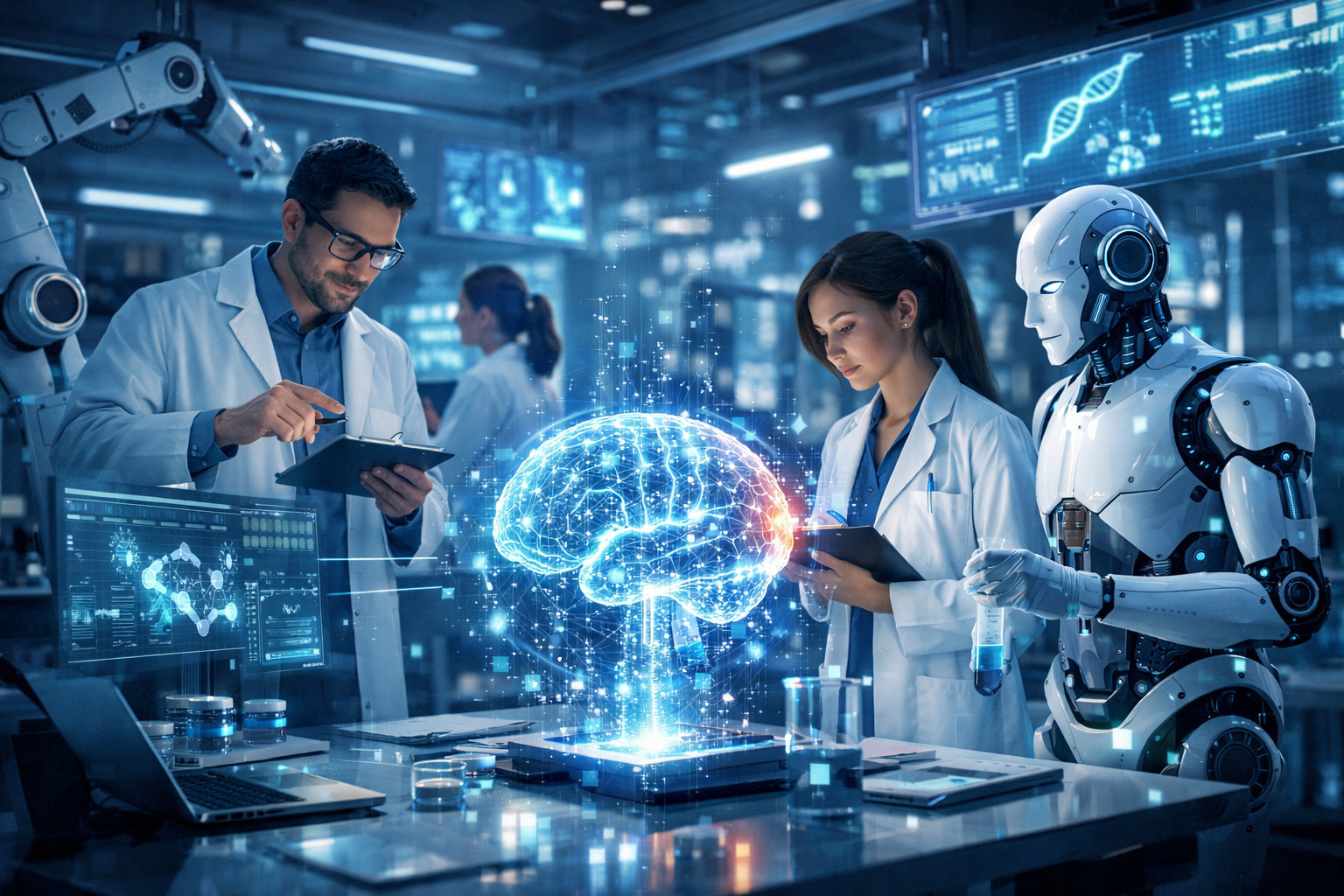
Generating Hypotheses
Instead of merely summarising research papers, AI will soon generate original hypotheses and design experiments. Systems can analyse vast datasets, spot hidden patterns and propose novel directions for investigation. Microsoft notes that this marks a new phase in AI‑driven science.
Collaborative Research
AI will partner with researchers throughout the scientific process. It can rapidly test scenarios, optimise experimental parameters and help interpret results. This collaborative loop accelerates discovery and reduces the time between insights and breakthroughs.
Implications for Science
From drug discovery to climate modelling, AI will unlock new possibilities. Automated lab platforms and robotic assistants can run experiments around the clock, while digital twins simulate complex systems with unprecedented fidelity.
Key Takeaways
- AI‑driven discovery: Intelligent systems will propose hypotheses and design experiments.
- Research accelerator: AI helps scientists explore more ideas in less time.
- Broader impact: Fields from medicine to materials science will benefit from AI collaboration.